
Customer Value Optimization for B2B SaaS

TL;DR: Customer value optimization is the work of growing the value each customer brings over their whole lifetime by fixing the one journey stage that leaks the most, not by pulling every lever at once. For B2B SaaS, that leak usually hides right after the sale, in the first win the customer was promised and never reached. Find the single binding stage and fix it, because growth is a retention problem wearing an acquisition costume.
Key Takeaways:
- Customer value optimization grows lifetime value per customer by fixing the single journey stage that caps the whole engine, instead of optimizing all eight stages at once.
- For B2B SaaS the binding constraint usually sits right after the sale, because the first promised win never lands and the relationship never compounds.
- Acquiring a new customer costs anywhere from five to 25 times more than retaining an existing one, so a leak after the sale quietly inflates the cost of every acquisition dollar upstream.
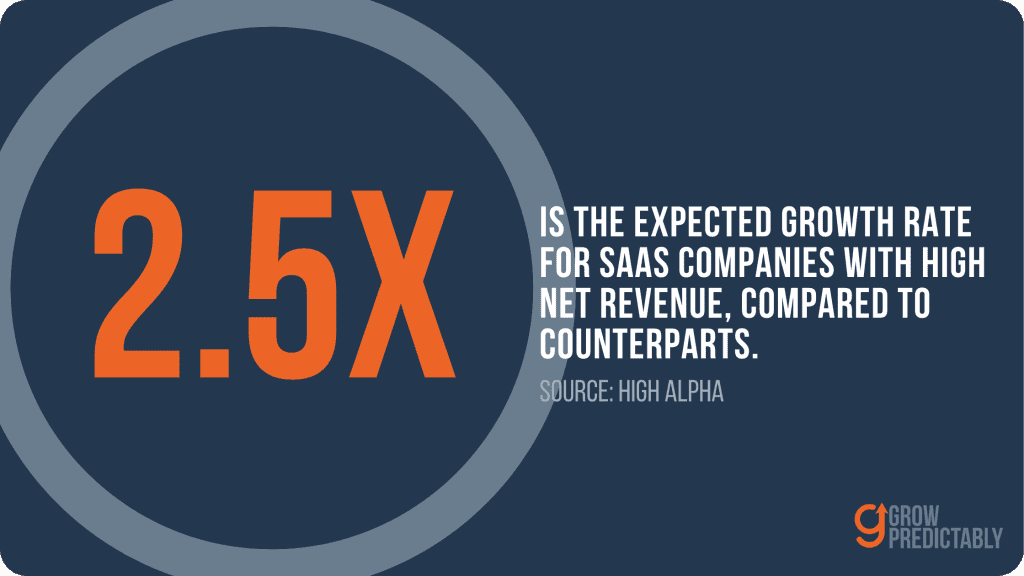
- SaaS companies with high net revenue retention grow 2.5x faster than their low-retention counterparts, which makes net revenue retention the one number to watch.
- The fix runs in four moves you can name and own: Diagnose the binding stage, Install the missing value path, Automate the return path, and Make It Stick with designed team habits.
I keep meeting B2B SaaS teams who are doing everything right on paper and still feel like they’re running in place. Leads come in. The dashboard looks busy. Recurring revenue stays flat, and every month feels like starting over. They’ve heard the phrase customer value optimization and arrive with the vocabulary, but they’re pulling on six levers at once and watching nothing move.
This article walks through the single-constraint diagnosis behind that pattern, the four-move path that fixes it (Diagnose, Install, Automate, Make It Stick), and the reframe that comes first: growth is a retention problem wearing an acquisition costume.
This is for the B2B SaaS founder or marketing leader whose pipeline is healthy but whose net revenue retention won’t climb, who suspects the problem is downstream but can’t name where. What follows is what diagnose-first looks like at the value-journey layer: not “go get more leads to outrun the leak,” but “find the one stage that’s binding the entire engine and fix that one.”
Why does customer value optimization stall for most B2B SaaS teams?
Customer value optimization stalls because most teams treat it as a to-do list. More traffic, higher conversion, bigger deals, less churn, all at once. That’s motion without a diagnosis, and effort goes up while value barely moves.
A system doesn’t get faster when you push harder on every part. It gets faster when you find the one part holding everything back.
The to-do-list trap
Open any popular guide on this topic and you’ll find a menu. Seven strategies. Five steps. A checklist of levers to pull. The trouble isn’t that the levers are wrong. It’s that pulling all of them at once is what I call random acts of marketing. You’re busy, you’re spending, and you have no way to tell which move actually changed the number that matters.
Here’s the part most teams miss. Your growth isn’t the problem. Retention is. When budget keeps pouring into acquiring new customers while the existing base sits barely touched, you’ve built a leaky bucket. You’re paying full price to refill what’s quietly draining out the bottom.
And that base is the expensive thing to ignore. Acquiring a new customer is anywhere from five to 25 times more expensive than retaining an existing one, and the same Harvard Business Review piece reports the Bain finding that increasing retention rates by 5% lifts profits by 25% to 95%.
So every dollar you spend covering a downstream leak with fresh acquisition is the most expensive dollar in your budget.
Optimizing transactions instead of relationships
The deeper miss is optimizing transactions when the real prize is the relationship. A single sale doesn’t build a business. Lifetime customers do. When you optimize for the next transaction, you measure the wrong horizon and you keep treating a retention problem like an acquisition problem.
Name the decision here. Before you touch a single tactic, you have to decide which stage of the journey actually needs the work. That’s the reframe the rest of this piece is built on.
What if growth is a retention problem wearing an acquisition costume?
One stage of your value journey is the binding constraint, and it sets the ceiling on the whole engine. For B2B SaaS that stage usually hides downstream, right after the sale, in onboarding and the first real moment of value.
Recurring revenue compounds on the base you keep, so a leak there quietly caps every acquisition dollar you spend upstream.
One constraint sets the ceiling
There’s a simple rule from manufacturing (the Theory of Constraints): a system can only move as fast as its single slowest step. Add capacity anywhere else and you don’t speed anything up. You just pile inventory in front of the bottleneck.
Pour more leads into a business with a post-sale leak and you get the same result. More signups, more churn, more cost, same flat revenue.
That’s why the front-end obsession backfires. Most teams optimize awareness and acquisition because those metrics are visible and feel like progress. But the constraint is almost never there. Unlock the real constraint, or you’re just stacking inventory in front of a bottleneck.
Where the leak usually hides
The leak hides in the gap between the moment someone buys and the moment they get the win you sold them. That’s the most fragile stretch of the entire relationship, and most companies can’t even define their first-win moment, so there’s no engineered aha for the customer to hit.
The promise was real on the sales call. Then the customer logs in, doesn’t reach it, and goes quiet.
Lincoln Murphy, the customer success expert and co-author of the book Customer Success, puts it plainly:
“Churn seeds are usually planted early – often during the sales process, especially when trickery is used.”
Great onboarding can’t fix a broken promise. If the sale set an expectation the product never delivers in week one, no email sequence saves it. This is why the math rewards fixing retention first. SaaS companies with high net revenue retention grow 2.5x faster than their low-NRR counterparts, according to High Alpha’s read of the 2024 SaaS Benchmarks Report.
The compounding base is the engine. The leak right after the sale is the thing throttling it.
So customer value optimization isn’t optimizing all eight stages of the eight-stage customer value journey. It’s finding and fixing the one that’s binding.
How do you find the one stage that is leaking value?
You find the leak by walking the journey from first touch to renewal and looking for the stage where the most value drops out. The fastest signal is the gap between what the sale promised and what the customer actually experiences in week one. Where the promise and the experience split, that’s your leak.
Map the journey, then look for the drop
Lay the journey out end to end. First touch, signup, onboarding, first win, regular use, renewal, expansion, referral. Then read your own numbers stage by stage and find where the drop-off is steepest relative to what you expected. You’re not trying to grade every stage. You’re hunting for the single one where value escapes fastest.
The symptom you’re explaining is consistent across these teams. Lifetime value per customer isn’t climbing, leads keep arriving, and revenue refuses to compound. That symptom almost always traces to one upstream cause. A stage that promises value and never delivers the first win.
The popular shallow answer (“we need more leads”) treats the wrong stage entirely.
The signal: where promise and experience split
Run one concrete test. Write down, in one column, exactly what your sales process promises a new customer. In the next column, write what that customer actually does and feels in their first seven days. Line them up. The widest gap between those two columns is where your value is leaking, and it’s usually the gap right after the sale.
Here’s the trap to name out loud. When teams see flat revenue, the reflex is to buy more top-of-funnel. That’s the worst move when the leak is downstream. You’re stacking inventory in front of the bottleneck and paying acquisition prices to do it.
For the measurement layer behind all of this, the retention metrics that actually predict growth go deeper than I will here, so I’ll keep this piece on the diagnosis and the fix.
If you want the stage named for you instead of mapping it by hand, the free Growth Gap Scan walks your journey and tells you which stage is leaking. That’s the bridge from diagnosis to action, and it’s where this article points at the end.
Diagnose, Install, Automate, Make It Stick: the four moves that fix the leak
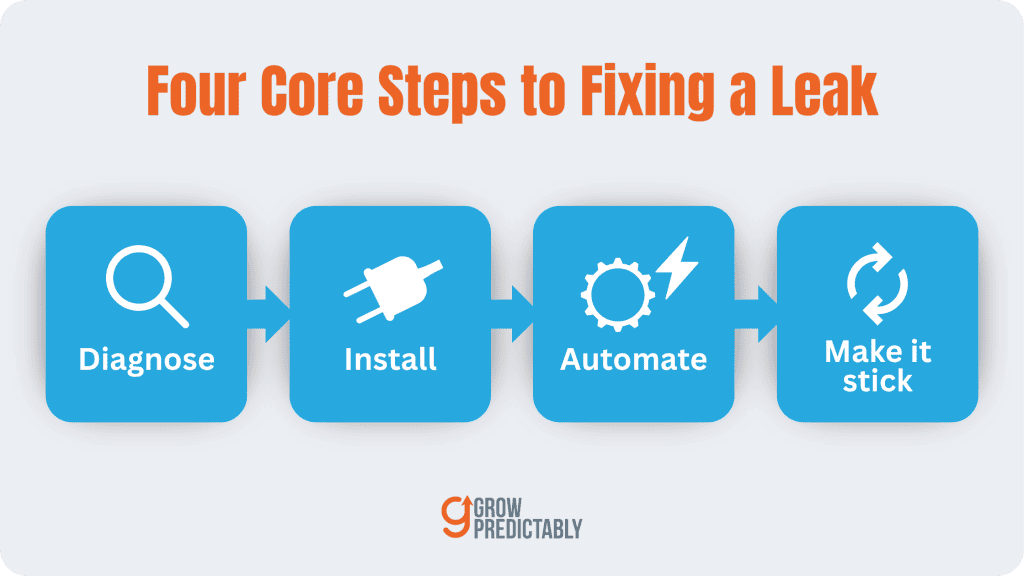
Once you know the binding stage, four moves fix it. Diagnose the one stage that’s leaking, Install the missing value path there, Automate the repeatable parts so the engine runs without a babysitter, and Make It Stick by designing the team habits that keep it running. Each move has one owner and one number to watch.
Diagnose the binding stage
Confirm the one stage that’s actually leaking, give it a single owner, and make it measurable in 30 to 90 days. The number to watch is net revenue retention, because it captures expansion minus churn in one figure. One stage, one owner, one number, one quarter. If you can’t name all four, you haven’t diagnosed yet. You’ve guessed.
Install the missing value path
Install means putting a proven value path in place at that stage, not building something from scratch. For a leak right after the sale, that’s an engineered first win in onboarding. Not more features. Not a longer product tour. The single fastest moment where the customer experiences the thing you sold them, designed on purpose and delivered on a schedule.
First sales don’t build wealth. Lifetime customers do, and the first win is what turns a buyer into a lifetime customer.
Automate the return path with AI and no-code
The repeatable parts of the return path run on machines. Onboarding nudges, usage-based check-ins, expansion prompts. Wire those with AI and no-code so they fire on the right signal without a person remembering to send them. This is where growth becomes automatic in the machine sense. The system does the consistent work, your team does the judgment work.
I’ve built exactly this kind of connected, automated engine before, including for an enterprise B2B SaaS company where a connected-system fix produced an 83% conversion lift and 58% year-over-year lead growth.
Make it stick with designed team habits
The last move is the one most projects skip, and it’s why most new systems quietly die. After the consultant leaves or the project closes, the new value path only survives if the team’s daily behavior carries it. Training builds knowledge. Habits shape results. Designing those small, repeatable team behaviors is its own discipline, which is why I work from the Tiny Habits method as a certified coach.
This is where growth becomes automatic in the human sense. I’m naming this as method and credential, not as a promise about your team’s adoption numbers, because behavior change is your work to do, not a metric I can hand you.
Here’s the paste-ready version you can run today, one line per move:
- Diagnose: Which single stage leaks the most value, who owns it, and what is the one number (net revenue retention) we’ll watch for 30 to 90 days?
- Install: What proven value path goes in at that stage, and what is the first win a new customer must reach in week one?
- Automate: Which repeatable parts of the return path (nudges, check-ins, expansion prompts) can run on AI and no-code starting now?
- Make It Stick: What small daily team habit keeps this system running after the project ends?
What does this look like for a real B2B SaaS company?
It looks like a company that was adding leads every month while recurring revenue sat flat, traced to a single post-sale onboarding leak, then fixed in four moves. The point of the example is restraint. One stage diagnosed, one fix installed, one return path automated, one habit designed. Not a rebuild of the whole funnel.
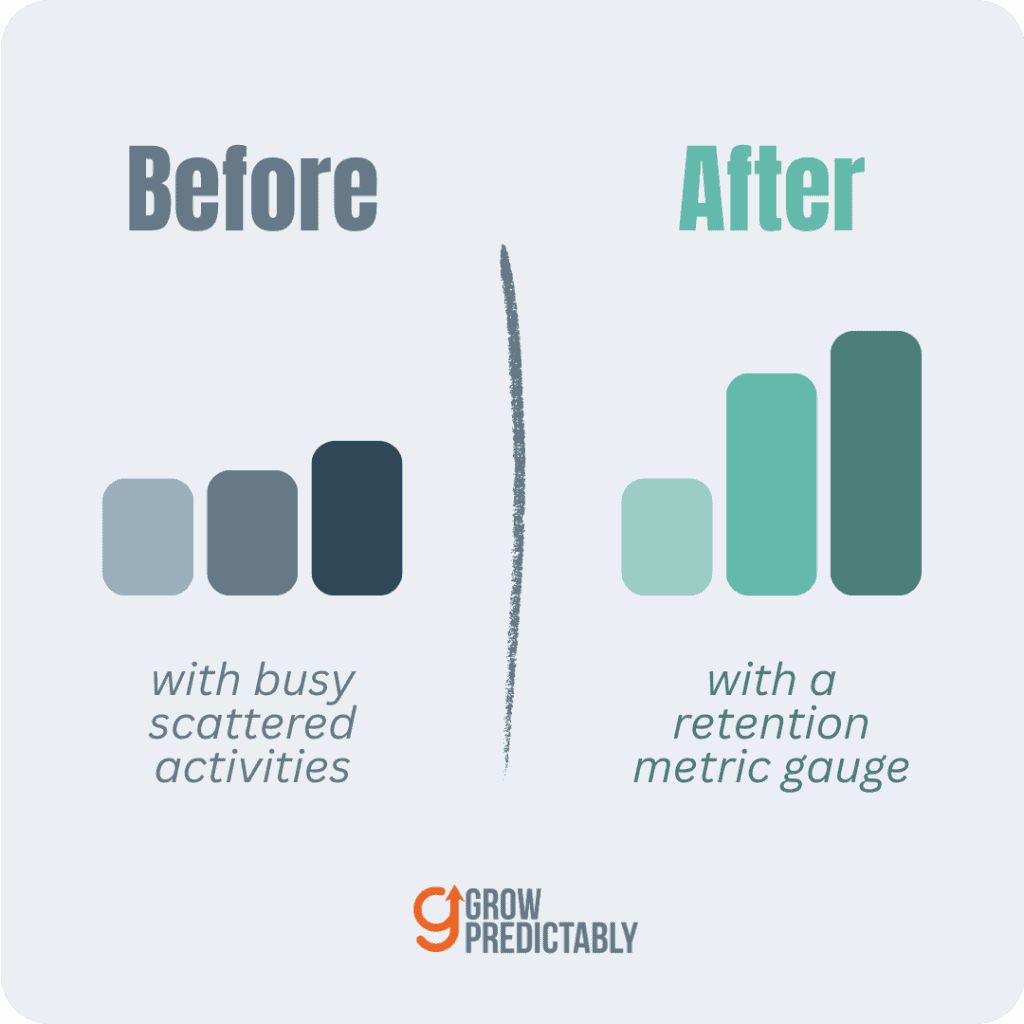
Before: motion everywhere, no compounding
Picture the before state. Marketing is hitting its lead targets. Sales is closing. The team is busy and the spend is real. But net revenue retention won’t move, and leadership keeps asking for more pipeline because that’s the visible lever.
Underneath, new customers sign up, never reach the first win, and churn before renewal. The base never compounds, so the company runs on a treadmill it’s paying full price to stay on.
This isn’t a fringe situation. In the latest benchmarks, existing customers now generate 40% of new ARR (over 50% for companies above $50M), even as net revenue retention compressed to 101% and new customer acquisition costs rose 14%. The base is where the growth is.
A post-sale leak is the company spending more to acquire while leaving its biggest growth source untapped.
After: one stage fixed, the base compounds
The recovery follows the four moves. Diagnose the leak to onboarding, where the promised first win wasn’t happening. Install an engineered first win the customer reaches in their first week. Automate the check-in path so usage signals trigger the right nudge without anyone watching a dashboard.
Design the small team habit that keeps the onboarding owner accountable to that first-win moment after the project closes.
In my own connected-system work for an enterprise B2B SaaS company, fixing the system rather than adding more inputs produced an 83% conversion lift and 58% year-over-year lead growth. Notice the one number to read at the end. Not raw leads.
Net revenue retention, the figure that tells you the base is finally compounding instead of leaking. Optimizing relationships rather than transactions is the whole game, and balancing the value customers get against what the business needs is how you keep that fix honest over time.
How is customer value optimization different from CRO, the value journey, and full-funnel marketing?
Customer value optimization is the lifetime-value discipline. Conversion rate optimization improves one point in the funnel. The value journey is the map of the stages. Full-funnel marketing is the connected engine that runs across all of them.
This piece owns one job inside that set: diagnosing and fixing the single binding stage of value capture for B2B SaaS.
Keep the boundaries clean and the cluster composes. Conversion rate optimization is essential, but it lifts the percentage who say yes at one moment. It says nothing about whether those customers reach the value you promised after the sale, which is where most recurring revenue is won or lost.
The value journey is the map. If you want the full eight-stage picture, the pillar above owns it. This piece assumes you already accept the map and just need to know which stage to fix first.
Full-funnel marketing is the engine across the whole journey. When you want the architecture for a connected, full-funnel growth engine rather than the single-stage fix, that’s the peer to read. And the front-of-journey value exchange, the offer that earns the first yes, is a deliberate non-topic here, because this piece stays focused on the leak that opens after the yes, not before it.
Ready to find the one stage leaking your customer value?
Start with the diagnosis, not the to-do list. Stop optimizing all eight stages at once, find the single stage that’s binding your engine (for most B2B SaaS, the gap right after the sale), and fix that one first. The fastest way to name your leak is to let the scan walk your journey and point straight at it, so you’re spending your next quarter on the constraint instead of the noise.