
Organic SEO Consultant in 2026: One Operator for SEO, AEO, and GEO

TL;DR: A good organic SEO consultant in 2026 is one operator across organic SEO, AEO, and GEO, a diagnose-and-build strategist, not a checklist-of-tactics vendor. For B2B SaaS that means targeting buyer-intent keywords, earning visibility in AI answers as well as classic search, and measuring on pipeline. Hire one when the constraint is strategic, not just execution.
Key Takeaways
- The role is now one operator across organic SEO, AEO, and GEO. Diagnosis and system-building come first, execution second, because the fix depends on what is actually broken.
- Organic compounds where paid stops the moment you stop paying, which is why organic leads convert far better.
- A 2026 consultant must win AI answers (GEO and AEO), because most B2B companies are invisible there.
- Hire when the constraint is strategic. If you only need hands to publish an existing plan, you may need a writer, not a strategist.
- Start with a diagnosis, not a proposal. Any consultant worth hiring should be able to tell you what is capping your growth before they tell you what they would sell you.
That one-operator reality is newer than most job titles admit. The three jobs, organic SEO, answer engine optimization (AEO), and generative engine optimization (GEO), used to be separate hires, and plenty of consultants still run only the first.
You will see the same role advertised as an organic search consultant, an organic SEO expert, or an SEO strategist. The titles vary. The job does not.
If you are searching for an organic SEO consultant, you are probably tired of either flat results or a services invoice that never quite connects to revenue. The role has also quietly widened. The title still says organic SEO, but the job now spans SEO, AEO, and GEO, because that is where your buyers actually search.
I am Brian Shelton. I do this work for B2B SaaS companies, and I have run it inside one at enterprise scale. This is an honest guide to what the role really is now, when hiring one is worth it, and how to tell a strategist who will build you a system from a vendor who will sell you a checklist of tactics. At the end I will tell you plainly how I work, so you can decide whether that is what you need.
What Does an Organic SEO Consultant Actually Do?
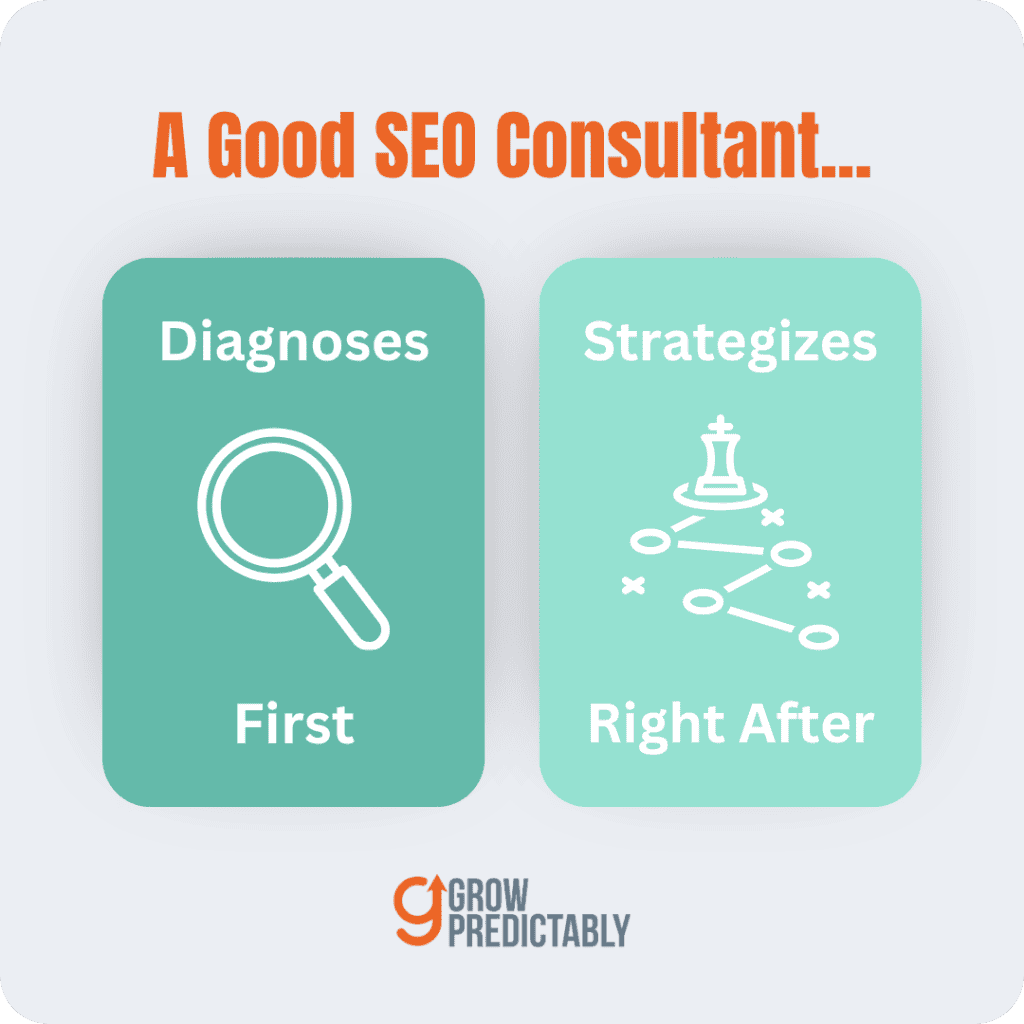
An organic SEO consultant is not someone you hand a keyword list to so they can go build links. The real role is closer to a diagnostician who also builds. They start by figuring out why your site is not earning qualified visibility, the kind that turns into pipeline. Then they design and build the system that fixes what is actually broken.
The scope of the job has also grown. Classic organic SEO is now only one of three connected disciplines, alongside answer engine optimization (AEO) and generative engine optimization (GEO), because buyers research across Google and AI tools at the same time. A modern consultant owns all three as one system, not as separate services.
The fix is never generic. Sometimes the constraint is that you target popular keywords that attract everyone except buyers. Sometimes you rank fine but are absent from the AI answers where buyers now research. Sometimes you have traffic that nobody measures against pipeline, so the whole program looks optional.
Each of those is a different problem with a different fix, and a good consultant names the constraint before producing anything. A consultant who opens with their standard service package, before understanding your funnel, is selling you their process rather than solving your problem.
Why Organic, and Why It Compounds
Paid search stops working the moment you stop paying. Organic does the opposite. The authority you build, the content that ranks, the pages that get cited in AI answers, all of it keeps earning visibility long after the work is done. That is the whole case for treating organic as an investment, not a monthly cost, and it is why a good consultant pays for themselves over time instead of just spending your budget.
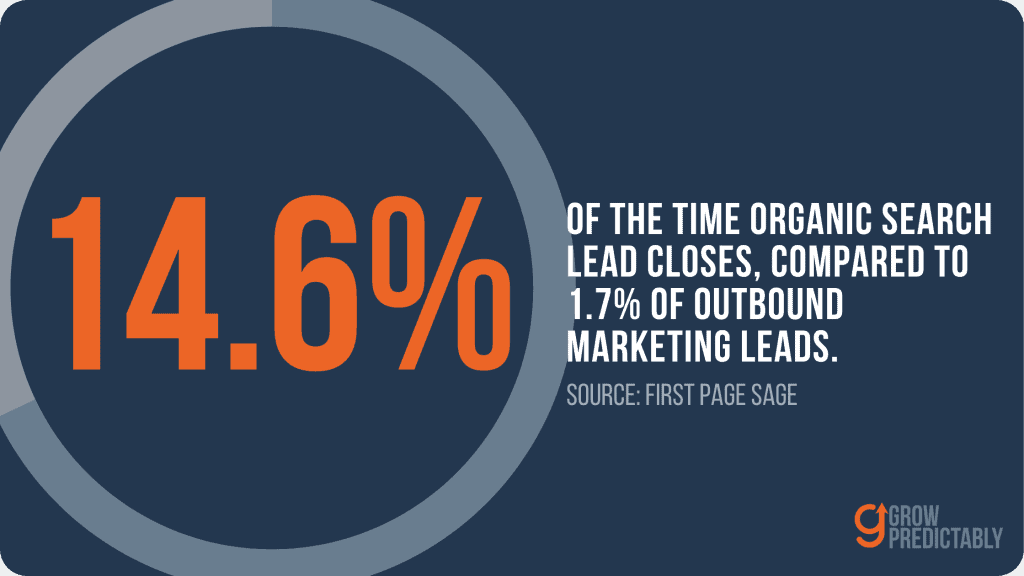
The conversion math reinforces it. According to FirstPageSage, “the average organic search lead closes 14.6% of the time, compared to just 1.7% for outbound marketing leads like TV, radio, print ads, trade shows, cold calls, and unsolicited email.”
A buyer who found you by searching the exact problem you solve is already most of the way to a decision. That is the quality difference an organic SEO consultant is really hired to produce, and every intent-led page you build keeps producing it for years.
What a Good Consultant Does Differently in 2026
The difference between a good organic SEO consultant and an average one used to be technical skill. Now it is judgment about where to point the effort. Three habits separate the modern consultant from a commodity vendor.
First, they target buyer-intent keywords over volume. They would rather rank for the few hundred searches a month that only a real buyer would make than the popular term that fills a traffic chart with non-buyers. Second, they treat AI answers as a primary battleground, not an afterthought.
Search increasingly returns AI summaries, and most companies are nowhere in them. According to the 2X AI Visibility Index reported by Demand Gen Report, which analyzed 70 B2B companies, “96% of B2B companies are invisible in AI-driven buyer discovery, appearing only in late-stage queries.”
A 2026 consultant builds the authority and citability that earns a place in those AI answers. It is the same work that wins classic rankings, applied deliberately. Third, they measure everything on pipeline.
Underneath all three is a point Eli Schwartz, author of Product-Led SEO, makes well: “When it comes to SEO, success often depends not on what you do but on how you do it.” The tactics are largely public knowledge. The value of a good consultant is the judgment about which ones matter for your business, in what order, and why.
When Do You Actually Need One, and When Do You Not?
Hiring an organic SEO consultant is worth it when your constraint is strategic rather than just a shortage of hands. Four signs usually mean the problem is strategy: you do not have a buyer-intent keyword strategy, you are invisible in AI answers, your content ranks but never converts, or nobody can tell you which organic visibility produces pipeline.
A consultant earns their fee by pointing limited effort at the few terms and fixes that actually move revenue.
You may not need a strategist if you already have a sound strategy and simply need execution capacity. If the plan is clear and good and you just need someone to produce the content, you might need a writer or a production team, not a consultant. Be honest about which one you are missing. Hiring a senior strategist to execute someone else’s mediocre plan wastes both of you.
And whoever you hire, the goal should be a system your team can eventually run, not a permanent dependency on the consultant. If the gap turns out to be broader than search, the real question is growth partner versus agency. The best ones work to make themselves unnecessary, then stay because you want them, not because you are stuck.
What Should You Look For, and What Are the Red Flags?
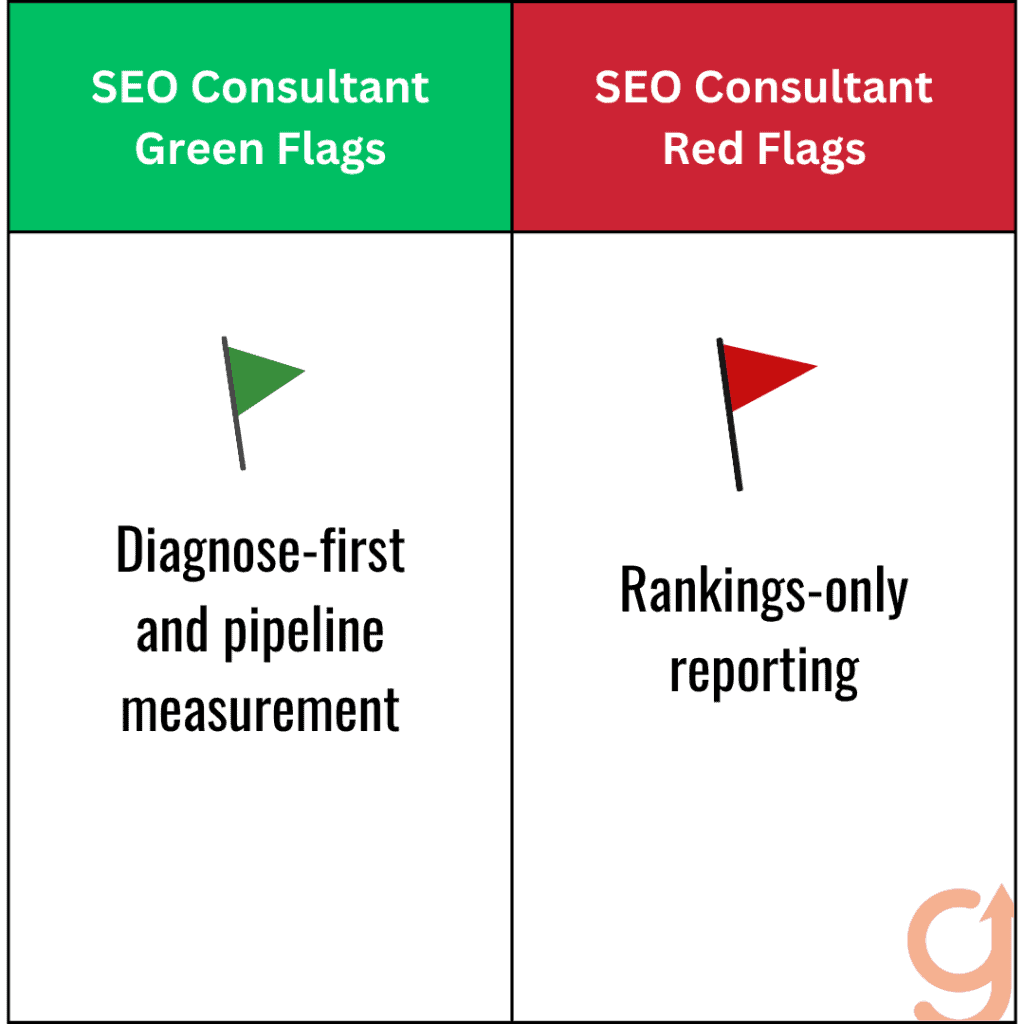
When you evaluate an organic SEO consultant, look for diagnose-first thinking, a buyer-intent keyword strategy rather than a volume chase, genuine fluency in AI answers (GEO and AEO), a habit of measuring on pipeline, and real first-hand operator experience rather than a services brochure.
Four questions separate the two on a first call. What would you diagnose before you did anything? Which of our keywords would you drop, and why? How would you know in ninety days whether this is working? And what would make you tell us not to hire you? Listen for whether the answers start with your business or with their package. That same operator-versus-order-taker test runs through hiring any digital marketing agency.
The red flags are the mirror image. Rankings-only reporting, with no line of sight to pipeline, means they will optimize for a number that does not pay you. A fixed services checklist applied before any diagnosis means you are buying their process, not a solution to your constraint. And anyone who ignores the AI-answer shift is fighting the last war. That shift is real and measurable.
Pew Research found that users who encountered an AI summary clicked a traditional search result link in 8% of visits, compared with 15% for those who did not. A consultant who cannot speak to how they earn visibility inside those AI answers is selling you a 2019 service in a 2026 market. The deeper version of this work lives in a complete B2B SEO strategy, which a good consultant should be able to walk you through.
Why Diagnose Before You Prescribe?
The organic SEO consultant worth hiring starts the way a good doctor does, with a diagnosis. Before they touch a keyword, they find the one constraint actually capping your growth, because content produced at the wrong place is inventory, not pipeline. From there the work anchors on the decision your buyer is making, so it earns the qualified pipeline that organic and AI search produce when you are the trusted answer at the moment of choice.
That order is the whole difference. Organic SEO is one system inside a broader B2B SaaS growth strategy, and sometimes the real constraint is somewhere else entirely. Naming it first is what keeps you from buying twelve months of content that ranks and never converts.
How Do I Work as Your Organic SEO Consultant?
Everything above is the job as I see it. Here is how I actually run it, so you can judge me against my own standard.
I start with the constraint, not the keyword list. My diagnostic approach is Growth Gap Marketing, built on the Theory of Constraints: growth is capped by one thing at a time, and until you name it, every dollar you spend after that is a guess. In practice it means I grade your funnel end to end before I recommend a single piece of content.
The free Growth Gap Scan is the public version of that same diagnosis. Sixteen questions, about two minutes, and it names the stage that is capping your growth. It is the first step of working with me rather than a separate giveaway, and it is deliberately the same place I start with every client.
From there we walk your results together on a call and I tell you what I see in them. If organic visibility is your constraint, we talk about the work. If it is not, I say so, and you have saved yourself a retainer aimed at the wrong problem. That is not a sales technique. It is the only honest output of a diagnosis.
If it is a fit, the engagement is the Predictable Growth Accelerator: a twelve to sixteen week done-with-you build where I act as your fractional CMO and your team builds the system alongside me, so you own it and it keeps running after I leave. You get a map of your growth engine, a growth scorecard, a ninety day plan, a living dashboard, the automation layer that keeps it running, and the operating habits your team runs it on. Expect roughly two to four hours from your side every two weeks. I work alongside you until every system in your blueprint is built, tested, and operational. Most clients keep me on as their fractional CMO once the engine is installed.
I have run this work at both ends of the scale. At PowerSchool, a technical SEO overhaul I ran cut bad URLs 84.1%, from 3,810 down to 605, over eight months, and a multi-team web optimization effort I contributed to grew contact-sales pipeline 68%. On my own site, I took Grow Predictably’s Ahrefs domain rating from zero to 44 from a cold start through outreach and content, most of it automated. The enterprise work taught me what actually breaks at scale. My own site is where I test what I install for clients before I install it.
Who Do I Work Best With, and Who Am I Not For?
I work best with B2B SaaS founders who need a repeatable pipeline beyond founder-led sales, and with B2B SaaS marketing leaders who want a clear read on where the funnel is actually leaking so next quarter is not another guess. Fractional revenue leaders who need a demand and follow-up engine to plug into each client account are a good fit as well. Coaches, consultants, and boutique agencies are an adjacent fit: the same diagnostic method applied to a service business.
I am the wrong hire in three cases. If you already have a sound strategy and what you need is production capacity, hire a writer or a production team instead. If you want a fixed checklist of deliverables shipped without a diagnosis first, we will frustrate each other. And if the outcome you want reported is rankings, we are measuring different things.
Saying all that costs me some inquiries. It also means the conversations I do have start honestly.
What Do Results Look Like, and When?
In the first few weeks you get the diagnosis: the named constraint, what is causing it, and the plan that clears it. That part moves quickly, because it is the part I have systematized.
The visibility takes months. Organic authority compounds, which is the reason to build it, and it is the same reason it does not arrive on a schedule. Rankings move when the work earns them, and qualified pipeline follows visibility rather than arriving alongside it.
Anyone who gives you a date for a ranking is guessing. What I will commit to is the diagnosis, the plan, the build, and a measurement line from organic visibility through to pipeline, so you can see for yourself whether it is working instead of taking my word for it. Individual results vary based on market, offer, and implementation.
Frequently Asked Questions
What does an organic SEO consultant do?
An organic SEO consultant diagnoses why your site is not winning qualified search and AI-answer visibility, then builds the system to fix it: a buyer-intent keyword strategy, authority content, technical fixes, and measurement tied to the pipeline. The role is strategy and diagnosis first, execution second, because the right fix depends on what is actually broken.
Is it worth hiring an organic SEO consultant?
Yes, when the constraint is strategic rather than just a shortage of hands. A good consultant earns the fee by pointing limited effort at the few terms and fixes that produce pipeline instead of vanity traffic. If you already have a sound plan and only need execution, you may need a writer or production team instead.
How much does an organic SEO consultant cost?
It varies widely by scope and seniority, so the better question is return. Organic leads close around 14.6% of the time versus 1.7% for outbound, so a consultant who targets buyer intent can pay for themselves through pipeline quality. Judge the price against the pipeline produced, not the hours billed.
What is the difference between an organic SEO consultant and an SEO agency?
A consultant typically owns strategy and diagnosis and works closely with your team, while an agency often executes a productized service. The best consultants build a system your team can run rather than a permanent dependency, so look for someone who works to make themselves unnecessary.
What should you look for in an organic SEO consultant in 2026?
Look for diagnose-first thinking, a buyer-intent keyword strategy rather than a volume chase, genuine fluency in AI answers (GEO and AEO), a habit of measuring on pipeline, and first-hand operator experience. The red flags are rankings-only reporting and a fixed services checklist applied before any diagnosis.
What happens after the Growth Gap Scan?
You get your score and your growth gap straight away, then we walk the results together on a call so you can hear what I see in them. If organic visibility is the constraint, we discuss the work. If it is something else, I tell you that instead. If it is a fit, the engagement is a twelve to sixteen week done-with-you build where your team owns what we install.
Do you work with companies outside B2B SaaS?
B2B SaaS founders and marketing leaders are the bullseye. Coaches, consultants, and boutique agencies are an adjacent fit, because the diagnostic method is the same when it is applied to a service business. The principle travels: if it has a funnel and a bottleneck, the method works.
How long before organic work shows results?
The diagnosis arrives in weeks. Visibility takes months, and qualified pipeline follows visibility rather than arriving with it. Anyone promising a specific ranking by a specific date is guessing. Individual results vary based on market, offer, and implementation.
Ready to Find Out If Search Is Actually Your Constraint?
Before you hire anyone, including me, find out what is actually capping your growth. The free Growth Gap Scan grades your funnel end to end and names your constraint in about two minutes. If it turns out to be organic search, you will know exactly what you are hiring for. If it turns out to be something else, you have just saved yourself a year of content that ranks and never converts.