B2B Sales Process Automation That Optimizes for Buyer Intent

TL;DR: Sales process automation does not create buyer intent, it amplifies whatever signal you point it at. In B2B SaaS, the highest-leverage move is automating the marketing-to-sales feedback loop so MQL and pipeline outcomes optimize your acquisition, not form-fill volume.
Key Takeaways
- The default version of sales automation speeds up activity. Speeding up activity around bad-fit leads just scales the waste.
- Diagnose before you automate. Name the one signal the revenue system should be measured and optimized on before you choose any tool.
- The leverage is in the loop: feed CRM-qualified outcomes back to your acquisition channels so spend learns from real buyers.
- Automate the handoff and qualification steps first. Those leak the most revenue.
- Layer rep enablement (including AI coaching) on top, after the signal is right, not before.
- Form fills are a late and noisy proxy for intent. Most of the real buying happens before a lead ever raises a hand.
B2B sales process automation works when it is pointed at the right signal. Automating activity (form fills, task volume, faster follow-ups) scales waste.
Automating the marketing-to-sales loop so the system optimizes for buyer intent (MQLs, pipeline, closed-won) shortens handoffs, cuts rep busywork, and teaches acquisition spend to chase real buyers instead of raw volume.
Most teams buy automation to move faster. The faster-moving version of a broken funnel is still a broken funnel. Before you wire up a single workflow, the question that decides whether automation pays off is simple: what signal is the system learning to optimize for?
Get that wrong and every tool you add makes the wrong thing happen at scale. Get it right and the same stack starts compounding in your favor.
Most B2B Sales Process Automation Scales the Wrong Signal
Ask a revenue team what they automated last quarter and you’ll usually hear a list of activities: auto-routing leads, sequenced follow-ups, auto-logged calls, form fills pushed straight into a cadence.
All of it real work. All of it faster than before. None of it answers the only question that matters: were those the right people to chase?
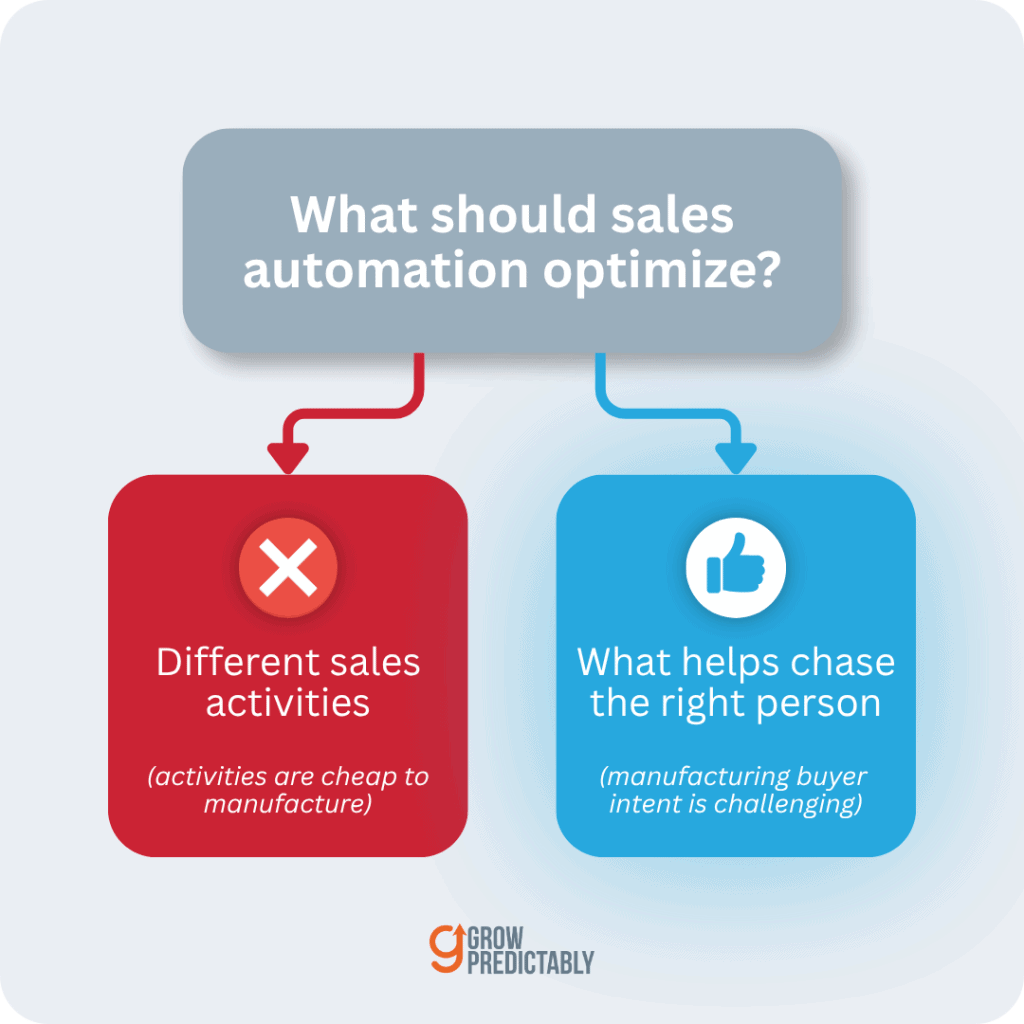
This is the trap. The common version of sales automation optimizes for activity, and activity is cheap to manufacture. You can always generate more form fills, more touches, more tasks marked complete. What you cannot manufacture is buyer intent.
High-volume activity is not the same as buyer intent, and a system that cannot tell the difference will happily pour effort into leads that were never going to buy.
The numbers make the cost obvious. Forrester research is blunt about it. Simon Daniels, a Principal Analyst at Forrester, found that fewer than 1% of leads convert to closed deals — a failure rate he describes as one that would normally be unthinkable.
When fewer than one in a hundred leads becomes revenue, automating more lead volume is not progress. It is faster failure.
The fix is not more activity. It is teaching the system to recognize the small slice of activity that signals a real buyer.
Start With the Decision the Automation Should Improve
Before you pick a tool, name the decision the work is supposed to improve.
Most automation projects skip this and go straight to plumbing, which is why so many of them produce tidy dashboards and flat pipelines. If a metric does not change a decision, it is decoration. And automating decoration is an expensive way to feel busy.
So diagnose first. Ask yourself:
- What is the constraint in your funnel?
- Where does revenue actually leak?
- Which handoff is breaking down, and why?
Sales process automation is one system inside a broader B2B SaaS growth strategy, and it pays off only when the rest of the funnel is pointed the same way.
For most B2B SaaS teams, the leak is not at the top. There is plenty of volume. The real problem is at the handoff, where marketing declares a lead qualified and sales quietly disagrees. No amount of faster routing fixes a definition both teams do not trust.
The decision underneath all of it is which signal the revenue system gets measured on. Chris Walker, CEO of Refine Labs, puts it plainly: revenue teams measured on qualified pipeline and revenue recognize the fastest path to hitting their goals far more clearly than those chasing raw lead counts.
Pick that signal first. Qualified pipeline, not raw leads. Every automation decision after it has a clear target to serve.
How I Rebuilt a Paid Program on Buyer-Intent Signal
A few years into leading AI and paid media for a B2B SaaS marketing team, the paid function came in-house. The agency was cut and the program landed on my desk. So I audited it the way you would diagnose any system before touching it.
What the old program was optimizing for
Three problems surfaced fast:
- A chunk of budget was bidding on brand and category terms that almost never converted to a real opportunity.
- There were no dedicated paid landing pages, so expensive clicks dumped onto generic pages built for organic visitors.
- Most importantly, the campaigns were optimizing toward form fills. On the surface that looked like success. Underneath, most of those form fills were the wrong people entirely, not the buyers we needed to reach.
The platform was doing exactly what we asked. We were asking for the wrong thing.
Closing the loop so spend learns from real outcomes
The rebuild had two halves.
First, build dedicated paid landing pages with the web team so the click had somewhere relevant to land. This is the same diagnose-before-you-spend discipline that governs B2B SaaS digital marketing generally.
Second, and this is the part most teams never wire up, feed the qualified signal back. We connected web conversion data to the CRM and sent the qualified MQL signal back to the ad platform so campaigns optimized for leads that actually became MQLs, not leads that merely filled out a form.
The platform’s machine learning is genuinely good. It just needs to be pointed at buyer intent rather than activity. Once it was, pipeline lifted materially because the system was finally chasing the right people.
Why this matters beyond paid media
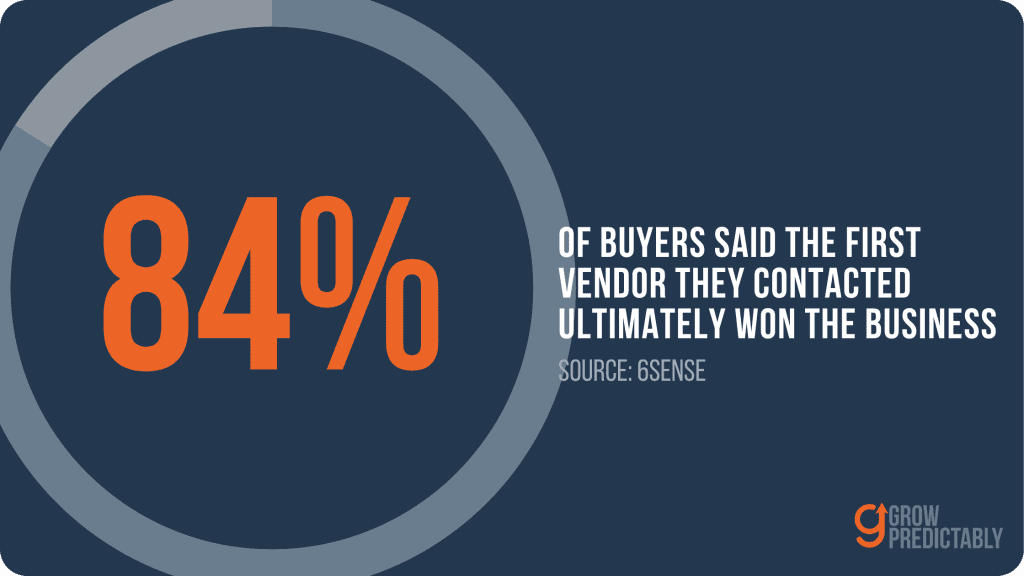
This is what closing the loop looks like in practice, and it connects to something bigger about how B2B buying actually works. According to 6sense’s 2023 B2B Buyer Experience Report, 84% of buyers said the first vendor they contacted ultimately won the business, and buyers typically reach out only when they are already 70% through the buying process.
By the time someone fills out your form, most of the decision is already behind them.
The signal worth automating around is not the form fill. It is the evidence of intent that tells you which accounts are actually in a buying motion.
Automate the Handoff First, Then the Enablement
Once the signal is defined, automate the steps that leak the most revenue: the handoff and qualification.
Route on the intent signal automatically. Score on it. Make the qualified-lead definition something both marketing and sales trust, then let automation enforce it consistently so nothing real slips through and nothing junk earns a rep’s time.
Rep enablement comes next, and this is where automation becomes a force multiplier for delivering insight rather than just moving records around.
For a sales team that was mostly new hires, I built an AI value-messaging coach on native Copilot. Reps could rehearse hard conversations in voice mode, practicing how to talk to a skeptical CFO, for example, and get coached toward outcomes and value instead of reciting features.
The discipline that made it work was on the input side. Instead of dumping decks into the model, I pre-extracted three clean inputs per product:
- The persona
- The value messaging
- The proof points
AI as decision support, fed deliberately. Not a vending machine fed scraps.
The payoff from getting AI into the selling motion is measurable. Gong analyzed more than one million sales opportunities across 1,418 sales organizations and found that deal win rates increased by 35% when AI was deployed in the workflow.
The lesson is not that AI is magic. It is that automation aimed at the real moment of value, the conversation, compounds. Aimed at busywork, it just makes the busywork faster.
A Diagnose-and-Build Sequence for B2B SaaS Teams
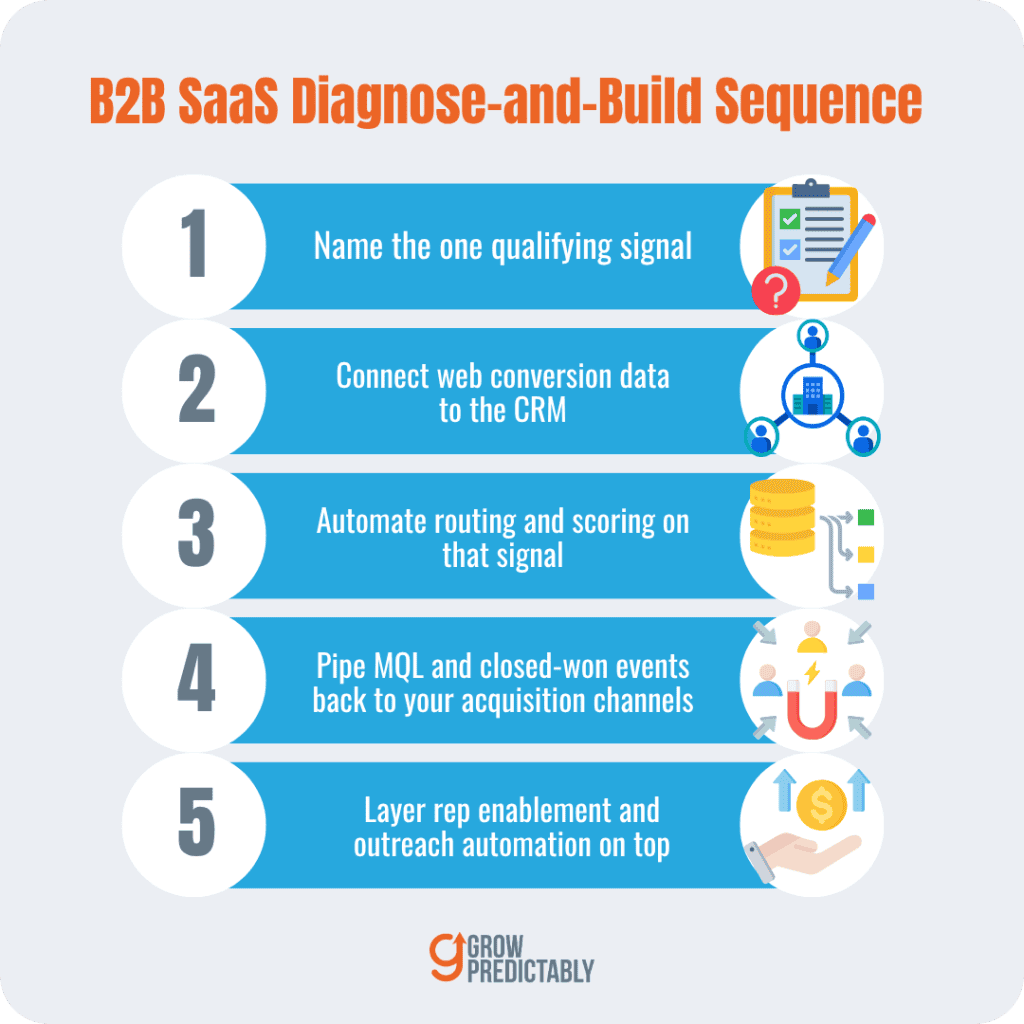
If you want to automate your sales process without scaling the waste, build it in this order:
- Name the one qualifying signal. Agree on the MQL or pipeline definition that sales genuinely trusts. This is the target everything else optimizes for.
- Connect web conversion data to the CRM. The signal has to be captured cleanly and tied to real outcomes, or you cannot optimize on it.
- Automate routing and scoring on that signal. Not on form-fill volume. Route real intent to reps fast and hold everything else back.
- Pipe MQL and closed-won events back to your acquisition channels. Make buyer intent the optimization target for paid and organic, so spend gets smarter every cycle instead of chasing vanity conversions.
- Layer rep enablement and outreach automation on top. Only after the signal is right. Coaching and sequences applied to a clean, intent-qualified pipeline pay off. Applied to a noisy one, they amplify the noise.
Notice that only the last step is the part most people think of as sales automation. The first four are the loop, and the loop is where the leverage lives.
Frequently Asked Questions About B2B Sales Process Automation
What is B2B sales process automation?
It is using software and AI to run repeatable steps of the sales process automatically, from lead capture and qualification to routing, follow-up, and reporting. The value depends entirely on what signal it optimizes for. Pointed at activity it scales busywork. Pointed at buyer intent (MQLs and pipeline) it shortens handoffs and improves lead quality.
What sales process steps should you automate first?
Automate the handoff and qualification steps first, because that is where the most revenue leaks. Define the one qualifying signal sales actually trusts, then automate routing and scoring on that signal. Outreach sequences and rep enablement come later, layered on a pipeline that is already clean.
How is sales process automation different from a CRM?
A CRM stores the data. Automation acts on it. The real leverage is the feedback loop automation enables: sending sales outcomes like MQLs and closed-won deals back to your acquisition channels so paid and organic spend optimizes for buyer intent instead of raw form-fill volume.
Does sales automation improve lead quality?
Only if it optimizes for the right signal. Automating more activity around bad-fit leads just scales the waste. Automating on a CRM-qualified MQL and pipeline signal, and feeding that signal back to your channels, improves quality because the system learns to chase real buyers rather than anyone who fills out a form.
How do you automate the marketing-to-sales handoff in B2B SaaS?
Connect web conversion data to the CRM, agree on the qualifying signal both teams trust, route on that signal automatically, and pipe MQL and closed-won events back to your ad platforms as the optimization target. That closes the loop so acquisition spend gets smarter every cycle instead of optimizing for vanity conversions.
Point Automation at Intent and the System Compounds
Sales process automation is not a tool you buy. It is a decision about what signal your system gets to optimize for. Point the same stack at activity, and you get a faster version of a leaky funnel.
Point it at buyer intent, close the loop between sales outcomes and acquisition spend, and the system compounds: cleaner pipeline, less rep busywork, and channels that learn from real buyers every cycle.
The starting move is always diagnosis. Before you automate anything, figure out which signal your funnel is actually optimizing for today, and whether it is activity or intent.
This is exactly the work a fractional CMO for B2B SaaS is hired to lead. If you want a fast read on where your own loop is leaking, run the Growth Gap Scan and start from the constraint, not the tool.